
BREED STANDARD
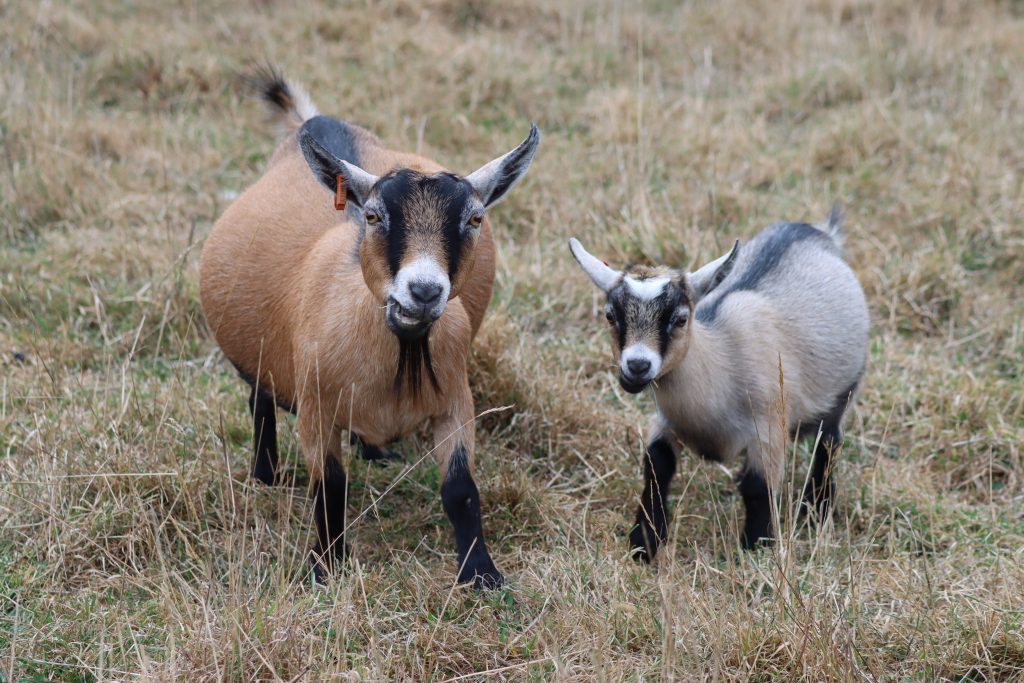
The Pygmy Goat is hardy, good natured, genetically small, cobby and compact. Head, neck and legs are short in relation to body length. The body is full-barrelled and well muscled, circumference in relation to height and weight is proportionally greater than in other breeds. Sexual characteristics are clearly defined.
Breed Characteristics
COAT
The full coat of straight, medium long hair varies in density with seasons and climates. On does, beards may be non-existent or sparse. On adult bucks, abundant hair growth is desirable; the beard to be full, long and flowing, the copious mane draping, cape-like, across the shoulders.
Colour and breed-specific markings
Any colour and colour combination is acceptable in Australia due to the inclusive vision of the Association.
It is natural that the Full blood stock imported as embryo from the US conforms to the USA standard, that have resulted from intense selection pressure over many generations.
As the breed develops in Australia colours and combinations will be assigned names.
The colours recognised so far are
- Solid black
- Solid brown and shades
- Solid white
- Agouti over black,grey and silver
- Agouti over dark brown tan and gold
- Caramel/Badger diluting grey, brown and gold
- Solid colour – no other markings.
- Black grey silver, dark brown, tan, gold
- Background colour with spots
- Back ground colour with Swiss markings
- white, fawn and brown
- Solid – does not exclude white mis-marking on the body
To describe a colour first, refer to the base colour then the pattern if relevant. Eg:
- Chocolate colour / Agouti patter
- Black colour / Swiss pattern


COAT LENGTH
Short traditional and Sheltie are all acceptable to the current standard.
BODY STRUCTURE
Head: Short to medium long; profile somewhat dished.
Muzzle rounded, not snippy; nose short, wide and flat.
Chin and underjaw full; bite even, neither overshot nor undershot; jaws broad, strong and well muscled.
Forehead broad, flat or concave.
Eyes set well apart, bright, prominent but not protruding. Any colour is acceptable.
Ears medium sized, firm, erect, alertly mobile.
Horns: Broad based curving up and over the neck and shoulder, disbudded animals preferred.
Neck: Well muscled; short, round, more full-throated than dairy breeds; more refined in does than in bucks.
Withers: Nearly level with, but not lower than the spine.
Shoulders: Muscular, well angulated and laid-on, tightly attached; point of shoulder placed posterior to the sternum.
Ribs: Wide apart, well sprung; rib bone long, wide and flat.
Back: Strong, laterally straight, level along chine and loin.
Chine: Broad, level from withers to loin.
Loin: Broad, strong, nearly level, rising slightly toward the iliac crest.
Rump: Medium long, medium wide, neither level nor steep.
Hips: Wide, nearly level with back.
Thurls: High, wide apart.
Pin bones: Wide apart, lower than hips, pronounced.
Tail: Set high, wide at the base, symmetrical, carried high.
Flanks: Deep, set low on barrel.
Thighs: Long and wide, well muscled, incurving towards udder.
Legs: Short, heavy bone, well muscled, wide apart.
Forelegs: Straight and squarely set, with elbows close to ribs and cannon bone short.
Hind legs: When viewed from the rear: hind legs straight, widely set to accommodate large barrel; stifle held tightly to the body. When viewed from the side: femur and tibia proportionately longer than in dairy breeds and angulated toward a more pronounced stifle joint, thus compensating for the short, flat, and flinty rear cannon bone.
Hocks: Cleanly moulded and sharply angled.
Pasterns: Short, strong and resilient.
Feet: Well-shaped, proportioned to size of animal, deep heel and level sole with hoofs symmetrical.
Body capacity: Large in proportion to size of animal, providing ample digestive and reproductive capacity as well as strength, vigour, and stamina.
Barrel: Broad, deep, increasing in width and depth toward flank giving an impression of perpetual pregnancy. Symmetrical, well supported by firm abdominal wall and well-sprung ribs. The disproportionately large circumference of the paunch is greater in does than in bucks.
Heart girth: Large due to long, well-sprung fore-ribs.
Chest: Well muscled brisket, wide floor, full at point of elbow.
Mammary system (Does)
Udder: Firm, rounded, small to medium sized, halves evenly balanced and symmetrical.
Rear attachment: High, full, tightly attached and blending smoothly.
Front attachment: Well forward, tightly attached without pocket, and blending smoothly into body.
Texture: Silky smooth, elastic, pliable but firm, free of lumps or scar tissue.
Teats: Two, cylindrical, of uniform length and size, sufficient for milking with two fingers and thumb. Symmetrically placed, free of obstructions, deformities, or multiple orifices.
Reproductive system (Bucks)
Testicles: Two, fully descended, of fairly equal size and firm. Epididamus full and pronounced
Teats: Two, cylindrical, of uniform length and size, symmetrically placed, free of deformities or multiple orifices.
Height and cannon length (Purebred measurements)
| Under 6 Months | Does | Bucks |
| Height | 47cm | 47.5cm |
| Cannon | 10cm | 11cm |
| 6 to 12 Months | Does | Bucks |
| Height | 52cm | 52.5cm |
| Cannon | 11cm | 11.5cm |
| 12 Months and Over | Does | Bucks |
| Height | 57cm | 60cm |
| Cannon | 11.5cm | 12cm |


Registration
All animals with pygmy percentage in their breeding are eligible to be registered on the NPGAA database and to be shown in NPGAA shows -their percentage of pygmy genetics (based on proof of documentation provided to the NPGAA registrar) will be recorded on their Registration certificate.
Animals less than 50% will be known as a Crossbred Pygmy.
Animals with no pygmy breeding in their genetics but who are animals used in the genetic recovery of the pygmy goat can be registered on the NPGAA database and will be referred to as Foundation animals.
The NPGAA does not require DNA testing to confirm parentage of Pygmies, but if breeders choose to have parentage DNA verified and the relevant paperwork is provided to the NPGAA Registrar, this information will be recorded on the NPGAA Registration certificate and remains the property of the breeder/owner.
Gestation Calendar
Based on a 145 day gestation
| Bred | Due | Bred | Due | Bred | Due | Bred | Due | Bred | Due | Bred | Due |
|---|---|---|---|---|---|---|---|---|---|---|---|
| 1 Jan | 26 May | 1 Mar | 24 Jul | 1 May | 23 Sep | 1 Jul | 23 Nov | 1 Sep | 24 Jan | 1 Nov | 26 Mar |
| 2 Jan | 27 May | 2 Mar | 25 Jul | 2 May | 24 Sep | 2 Jul | 24 Nov | 2 Sep | 25 Jan | 2 Nov | 27 Mar |
| 3 Jan | 28 May | 3 Mar | 26 Jul | 3 May | 25 Sep | 3 Jul | 25 Nov | 3 Sep | 26 Jan | 3 Nov | 28 Mar |
| 4 Jan | 29 May | 4 Mar | 27 Jul | 4 May | 26 Sep | 4 Jul | 26 Nov | 4 Sep | 27 Jan | 4 Nov | 29 Mar |
| 5 Jan | 30 May | 5 Mar | 28 Jul | 5 May | 27 Sep | 5 Jul | 27 Nov | 5 Sep | 28 Jan | 5 Nov | 30 Mar |
| 6 Jan | 31 May | 6 Mar | 29 Jul | 6 May | 28 Sep | 6 Jul | 28 Nov | 6 Sep | 29 Jan | 6 Nov | 31 Mar |
| 7 Jan | 1 Jun | 7 Mar | 30 Jul | 7 May | 29 Sep | 7 Jul | 29 Nov | 7 Sep | 30 Jan | 7 Nov | 1 Apr |
| 8 Jan | 2 Jun | 8 Mar | 31 Jul | 8 May | 30 Sep | 8 Jul | 30 Nov | 8 Sep | 31 Jan | 8 Nov | 2 Apr |
| 9 Jan | 3 Jun | 9 Mar | 1 Aug | 9 May | 1 Oct | 9 Jul | 1 Dec | 9 Sep | 1 Feb | 9 Nov | 3 Apr |
| 10 Jan | 4 Jun | 10 Mar | 2 Aug | 10 May | 2 Oct | 10 Jul | 2 Dec | 10 Sep | 2 Feb | 10 Nov | 4 Apr |
| 11 Jan | 5 Jun | 11 Mar | 3 Aug | 11 May | 3 Oct | 11 Jul | 3 Dec | 11 Sep | 3 Feb | 11 Nov | 5 Apr |
| 12 Jan | 6 Jun | 12 Mar | 4 Aug | 12 May | 4 Oct | 12 Jul | 4 Dec | 12 Sep | 4 Feb | 12 Nov | 6 Apr |
| 13 Jan | 7 Jun | 13 Mar | 5 Aug | 13 May | 5 Oct | 13 Jul | 5 Dec | 13 Sep | 5 Feb | 13 Nov | 7 Apr |
| 14 Jan | 8 Jun | 14 Mar | 6 Aug | 14 May | 6 Oct | 14 Jul | 6 Dec | 14 Sep | 6 Feb | 14 Nov | 8 Apr |
| 15 Jan | 9 Jun | 15 Mar | 7 Aug | 15 May | 7 Oct | 15 Jul | 7 Dec | 15 Sep | 7 Feb | 15 Nov | 9 Apr |
| 16 Jan | 10 Jun | 16 Mar | 8 Aug | 16 May | 8 Oct | 16 Jul | 8 Dec | 16 Sep | 8 Feb | 16 Nov | 10 Apr |
| 17 Jan | 11 Jun | 17 Mar | 9 Aug | 17 May | 9 Oct | 17 Jul | 9 Dec | 17 Sep | 9 Feb | 17 Nov | 11 Apr |
| 18 Jan | 12 Jun | 18 Mar | 10 Aug | 18 May | 10 Oct | 18 Jul | 10 Dec | 18 Sep | 10 Feb | 18 Nov | 12 Apr |
| 19 Jan | 13 Jun | 19 Mar | 11 Aug | 19 May | 11 Oct | 19 Jul | 11 Dec | 19 Sep | 11 Feb | 19 Nov | 13 Apr |
| 20 Jan | 14 Jun | 20 Mar | 12 Aug | 20 May | 12 Oct | 20 Jul | 12 Dec | 20 Sep | 12 Feb | 20 Nov | 14 Apr |
| 21 Jan | 15 Jun | 21 Mar | 13 Aug | 21 May | 13 Oct | 21 Jul | 13 Dec | 21 Sep | 13 Feb | 21 Nov | 15 Apr |
| 22 Jan | 16 Jun | 22 Mar | 14 Aug | 22 May | 14 Oct | 22 Jul | 14 Dec | 22 Sep | 14 Feb | 22 Nov | 16 Apr |
| 23 Jan | 17 Jun | 23 Mar | 15 Aug | 23 May | 15 Oct | 23 Jul | 15 Dec | 23 Sep | 15 Feb | 23 Nov | 17 Apr |
| 24 Jan | 18 Jun | 24 Mar | 16 Aug | 24 May | 16 Oct | 24 Jul | 16 Dec | 24 Sep | 16 Feb | 24 Nov | 18 Apr |
| 25 Jan | 19 Jun | 25 Mar | 17 Aug | 25 May | 17 Oct | 25 Jul | 17 Dec | 25 Sep | 17 Feb | 25 Nov | 19 Apr |
| 26 Jan | 20 Jun | 26 Mar | 18 Aug | 26 May | 18 Oct | 26 Jul | 18 Dec | 26 Sep | 18 Feb | 26 Nov | 20 Apr |
| 27 Jan | 21 Jun | 27 Mar | 19 Aug | 27 May | 19 Oct | 27 Jul | 19 Dec | 27 Sep | 19 Feb | 27 Nov | 21 Apr |
| 28 Jan | 22 Jun | 28 Mar | 20 Aug | 28 May | 20 Oct | 28 Jul | 20 Dec | 28 Sep | 20 Feb | 28 Nov | 22 Apr |
| 29 Jan | 23 Jun | 29 Mar | 21 Aug | 29 May | 21 Oct | 29 Jul | 21 Dec | 29 Sep | 21 Feb | 29 Nov | 23 Apr |
| 30 Jan | 24 Jun | 30 Mar | 22 Aug | 30 May | 22 Oct | 30 Jul | 22 Dec | 30 Sep | 22 Feb | 30 Nov | 24 Apr |
| 31 Jan | 25 Jun | 31 Mar | 23 Aug | 31 May | 23 Oct | 31 Jul | 23 Dec | 1 Oct | 23 Feb | 1 Dec | 25 Apr |
| 1 Feb | 26 Jun | 1 Apr | 24 Aug | 1 Jun | 24 Oct | 1 Aug | 24 Dec | 2 Oct | 24 Feb | 2 Dec | 26 Apr |
| 2 Feb | 27 Jun | 2 Apr | 25 Aug | 2 Jun | 25 Oct | 2 Aug | 25 Dec | 3 Oct | 25 Feb | 3 Dec | 27 Apr |
| 3 Feb | 28 Jun | 3 Apr | 26 Aug | 3 Jun | 26 Oct | 3 Aug | 26 Dec | 4 Oct | 26 Feb | 4 Dec | 28 Apr |
| 4 Feb | 29 Jun | 4 Apr | 27 Aug | 4 Jun | 27 Oct | 4 Aug | 27 Dec | 5 Oct | 27 Feb | 5 Dec | 29 Apr |
| 5 Feb | 30 Jun | 5 Apr | 28 Aug | 5 Jun | 28 Oct | 5 Aug | 28 Dec | 6 Oct | 28 Feb | 6 Dec | 30 Apr |
| 6 Feb | 1 Jul | 6 Apr | 29 Aug | 6 Jun | 29 Oct | 6 Aug | 29 Dec | 7 Oct | 1 Mar | 7 Dec | 1 May |
| 7 Feb | 2 Jul | 7 Apr | 30 Aug | 7 Jun | 30 Oct | 7 Aug | 30 Dec | 8 Oct | 2 Mar | 8 Dec | 2 May |
| 8 Feb | 3 Jul | 8 Apr | 31 Aug | 8 Jun | 31 Oct | 8 Aug | 31 Dec | 9 Oct | 3 Mar | 9 Dec | 3 May |
| 9 Feb | 4 Jul | 9 Apr | 1 Sep | 9 Jun | 1 Nov | 9 Aug | 1 Jan | 10 Oct | 4 Mar | 10 Dec | 4 May |
| 10 Feb | 5 Jul | 10 Apr | 2 Sep | 10 Jun | 2 Nov | 10 Aug | 2 Jan | 11 Oct | 5 Mar | 11 Dec | 5 May |
| 11 Feb | 6 Jul | 11 Apr | 3 Sep | 11 Jun | 3 Nov | 11 Aug | 3 Jan | 12 Oct | 6 Mar | 12 Dec | 6 May |
| 12 Feb | 7 Jul | 12 Apr | 4 Sep | 12 Jun | 4 Nov | 12 Aug | 4 Jan | 13 Oct | 7 Mar | 13 Dec | 7 May |
| 13 Feb | 8 Jul | 13 Apr | 5 Sep | 13 Jun | 5 Nov | 13 Aug | 5 Jan | 14 Oct | 8 Mar | 14 Dec | 8 May |
| 14 Feb | 9 Jul | 14 Apr | 6 Sep | 14 Jun | 6 Nov | 14 Aug | 6 Jan | 15 Oct | 9 Mar | 15 Dec | 9 May |
| 15 Feb | 10 Jul | 15 Apr | 7 Sep | 15 Jun | 7 Nov | 15 Aug | 7 Jan | 16 Oct | 10 Mar | 16 Dec | 10 May |
| 16 Feb | 11 Jul | 16 Apr | 8 Sep | 16 Jun | 8 Nov | 16 Aug | 8 Jan | 17 Oct | 11 Mar | 17 Dec | 11 May |
| 17 Feb | 12 Jul | 17 Apr | 9 Sep | 17 Jun | 9 Nov | 17 Aug | 9 Jan | 18 Oct | 12 Mar | 18 Dec | 12 May |
| 18 Feb | 13 Jul | 18 Apr | 10 Sep | 18 Jun | 10 Nov | 18 Aug | 10 Jan | 19 Oct | 13 Mar | 19 Dec | 13 May |
| 19 Feb | 14 Jul | 19 Apr | 11 Sep | 19 Jun | 11 Nov | 19 Aug | 11 Jan | 20 Oct | 14 Mar | 20 Dec | 14 May |
| 20 Feb | 15 Jul | 20 Apr | 12 Sep | 20 Jun | 12 Nov | 20 Aug | 12 Jan | 21 Oct | 15 Mar | 21 Dec | 15 May |
| 21 Feb | 16 Jul | 21 Apr | 13 Sep | 21 Jun | 13 Nov | 21 Aug | 13 Jan | 22 Oct | 16 Mar | 22 Dec | 16 May |
| 22 Feb | 17 Jul | 22 Apr | 14 Sep | 22 Jun | 14 Nov | 22 Aug | 14 Jan | 23 Oct | 17 Mar | 23 Dec | 17 May |
| 23 Feb | 18 Jul | 23 Apr | 15 Sep | 23 Jun | 15 Nov | 23 Aug | 15 Jan | 24 Oct | 18 Mar | 24 Dec | 18 May |
| 24 Feb | 19 Jul | 24 Apr | 16 Sep | 24 Jun | 16 Nov | 24 Aug | 16 Jan | 25 Oct | 19 Mar | 25 Dec | 19 May |
| 25 Feb | 20 Jul | 25 Apr | 17 Sep | 25 Jun | 17 Nov | 25 Aug | 17 Jan | 26 Oct | 20 Mar | 26 Dec | 20 May |
| 26 Feb | 21 Jul | 26 Apr | 18 Sep | 26 Jun | 18 Nov | 26 Aug | 18 Jan | 27 Oct | 21 Mar | 27 Dec | 21 May |
| 27 Feb | 22 Jul | 27 Apr | 19 Sep | 27 Jun | 19 Nov | 27 Aug | 19 Jan | 28 Oct | 22 Mar | 28 Dec | 22 May |
| 28 Feb | 23 Jul | 28 Apr | 20 Sep | 28 Jun | 20 Nov | 28 Aug | 20 Jan | 29 Oct | 23 Mar | 29 Dec | 23 May |
| 29 Apr | 21 Sep | 29 Jun | 21 Nov | 29 Aug | 21 Jan | 30 Oct | 24 Mar | 30 Dec | 24 May | ||
| 30 Apr | 22 Sep | 30 Jun | 22 Nov | 30 Aug | 22 Jan | 31 Oct | 25 Mar | 31 Dec | 25 May | ||
| 31 Aug | 23 Jan |